
Quick Answer: Is Silver a Good Investment in India in 2026?
TL;DR
- Yes – if you treat silver as a long-term, volatile satellite holding and phase your buys. Think 3–5 years, not 3–5 weeks.
- Use staggered purchases (DCA/micro-investing) to reduce timing risk after 2025’s record rally.
- Ideal use-case: diversify a portion of your gold allocation into silver; rebalance annually.
“In 2025, MCX silver was still headed for its best year ever, up ~157% in INR terms.” – Source
Why the Hype Now?
2025 delivered outsized returns. But after a parabolic year, pullbacks are normal – sometimes sharp.
The structural story (solar, EVs, electronics) remains strong, while India’s INR adds an extra layer to your returns.
What This Article Covers
- Whether it’s a good time to invest now, how INR affects your price, and the smart ways to buy.
- Risk checklist, allocation rules, taxes, and an easy phasing plan using micro-investing.
Target Keywords to Answer Early
- is silver a good investment in india
- is it a good time to invest in silver
- is silver a good buy now
- is it good to buy silver today
- good time to buy silver
- silver good time to buy
Is It a Good Time to Invest in Silver Now? Signals to Watch in 2026
“‘Dip buying is preferred’ for silver, notes Praveen Singh (Mirae Asset Sharekhan), Business Standard, Jun 27, 2025.” – Source
If you’re asking “is silver a good investment in India?” or “is it a good time to invest in silver,” here’s how to decide with data, not FOMO.
What Decides Your Entry
- USD silver trend vs 200-day average; confirm MCX trend and momentum in INR.
- US real rates, the Fed’s path, and inflation expectations (lower real yields generally support silver).
- China’s manufacturing pulse; global solar installations; EV sales momentum.
- Gold–Silver Ratio (GSR): add more silver when GSR is high; trim when it gets too low.
- INR direction: a weakening rupee can buoy local prices even if global silver pauses.
Is Silver a Good Buy Now? How to Decide Week by Week
- Use a simple rule: buy-the-dip in tranches when price drops 5–10% from recent highs.
- Combine with GSR bands:
- Accumulate when GSR > 75–80 (silver undervalued vs gold).
- Neutral between 60–75.
- Cautious when < 60 (silver may be overheated).
- Check domestic premiums and MCX liquidity before bigger allocations.
“Is It Good to Buy Silver Today?” Checklist
3 green lights:
Price above 200-DMA and trend intact.
GSR above mid-band (≥ 70–75) favoring accumulation.
INR weakening vs USD (supports MCX silver).
3 red flags:
Blow-off spikes after parabolic runs.
Extreme RSI/overbought readings with negative divergences.
Thin domestic liquidity/premiums widening on MCX or physical markets.
Visual to Ground You
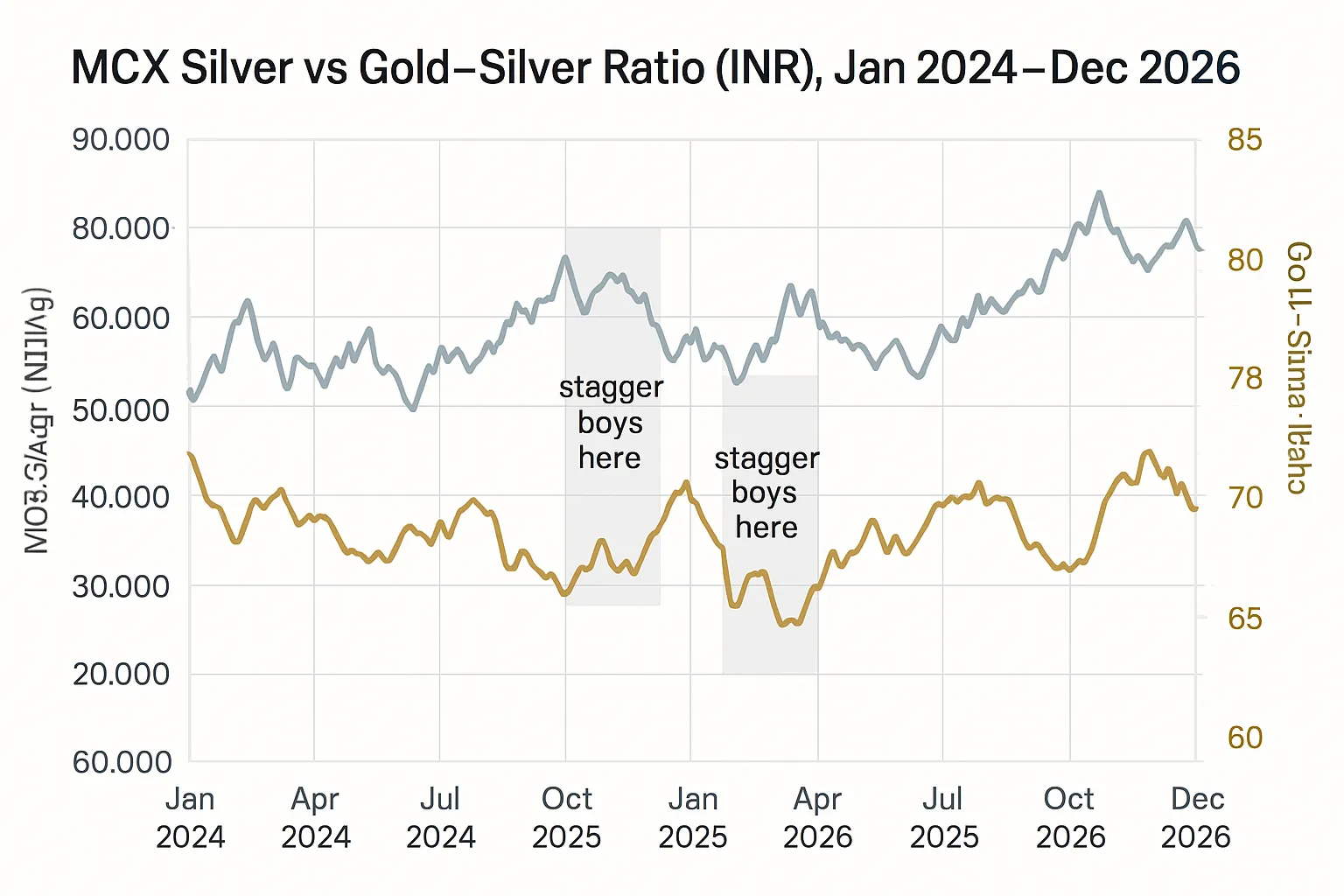
- 12–18 month chart view in INR: MCX Silver vs GSR overlay, with highlighted pullback zones labeled “stagger buys here.” Use it to spot 5–10% drawdowns for phased entries.
Pro Tip for New Investors
- Don’t go all-in. Split planned capital across 6–12 tranches over weeks/months.
- Use micro-investing/DCA to automate discipline and reduce second-guessing. It’s the smartest way to handle a volatile asset like silver and aligns perfectly with “is silver a good buy now?” decisions.
Fundamentals Driving Silver in 2026: Demand, Deficits, And Why India Cares
“Industrial uses made up ~58.7% of global silver demand in 2024, and the market ran a 148.9 Moz deficit – the fourth straight annual shortfall.” – Source
Industrial Demand Is the Engine
- Solar PV (TOPCon, HJT) is using more silver per watt as manufacturers push efficiency.
- EVs and charging infrastructure typically use 25–50 g of silver per vehicle across wiring, sensors, and power electronics.
- 5G, AI data centers, and consumer electronics rely on silver’s unmatched conductivity for high-frequency, miniaturized components.
Supply Tightness
Multi-year global deficit persists; much of silver supply is a by-product of lead/zinc/copper mining, limiting elastic response to price.
Recycling volumes aren’t rising fast enough to offset record industrial use.
Why This Matters in India
- India is highly import-dependent for silver; INR weakness versus USD can lift MCX prices even when global prices stall.
- Festivals and wedding seasons create bursts of local demand and premiums in key cities, tightening near-term supply.
What Could Change the Story
- Thrifting/substitution in PV and electronics if prices remain elevated for long.
- Faster mine supply if base-metal cycles turn up and by-product output expands.
Visual to Remember
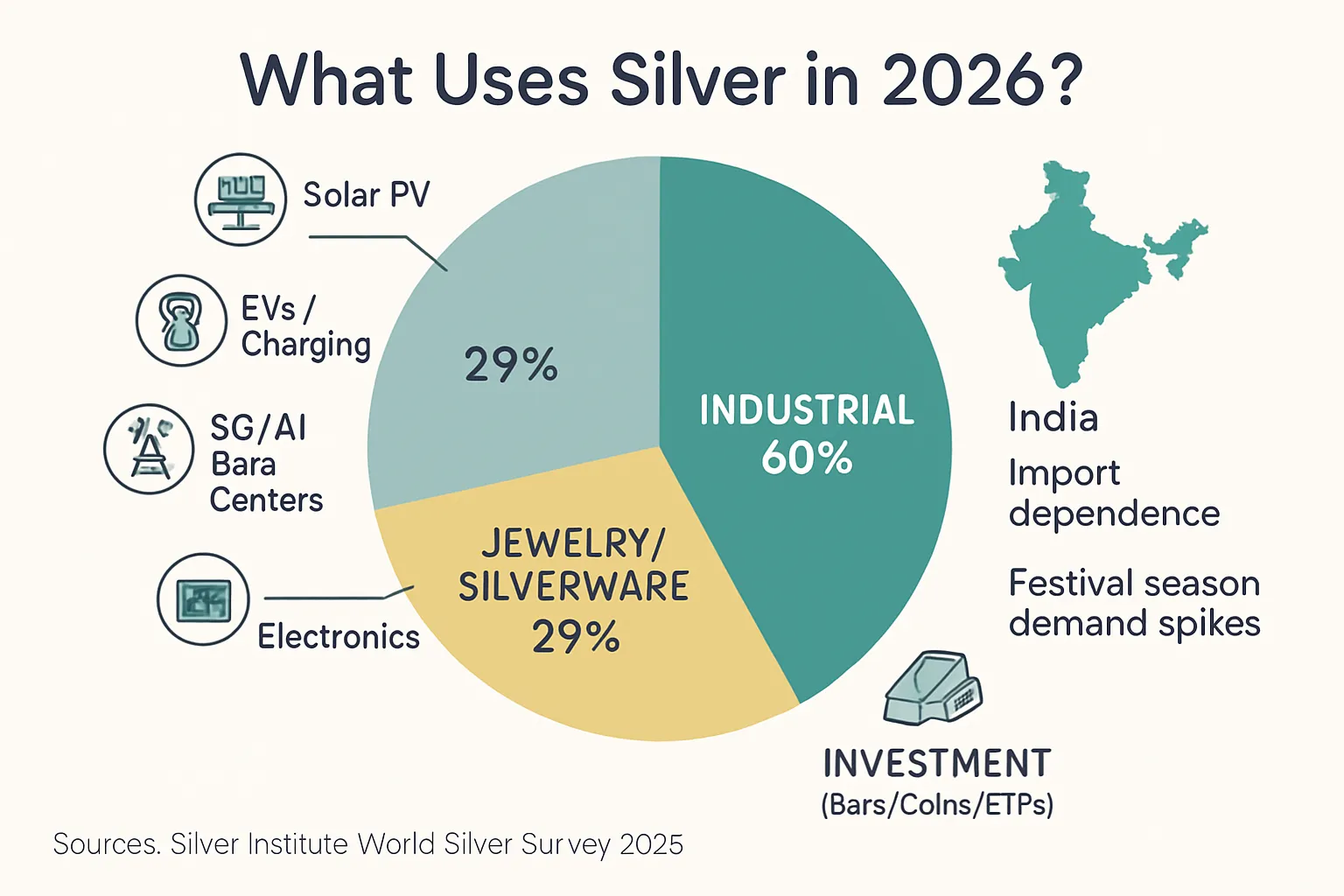
Sources: Silver Institute, World Silver Survey 2025
INR Math: How USD Silver Becomes Your MCX Price (And Your Returns)
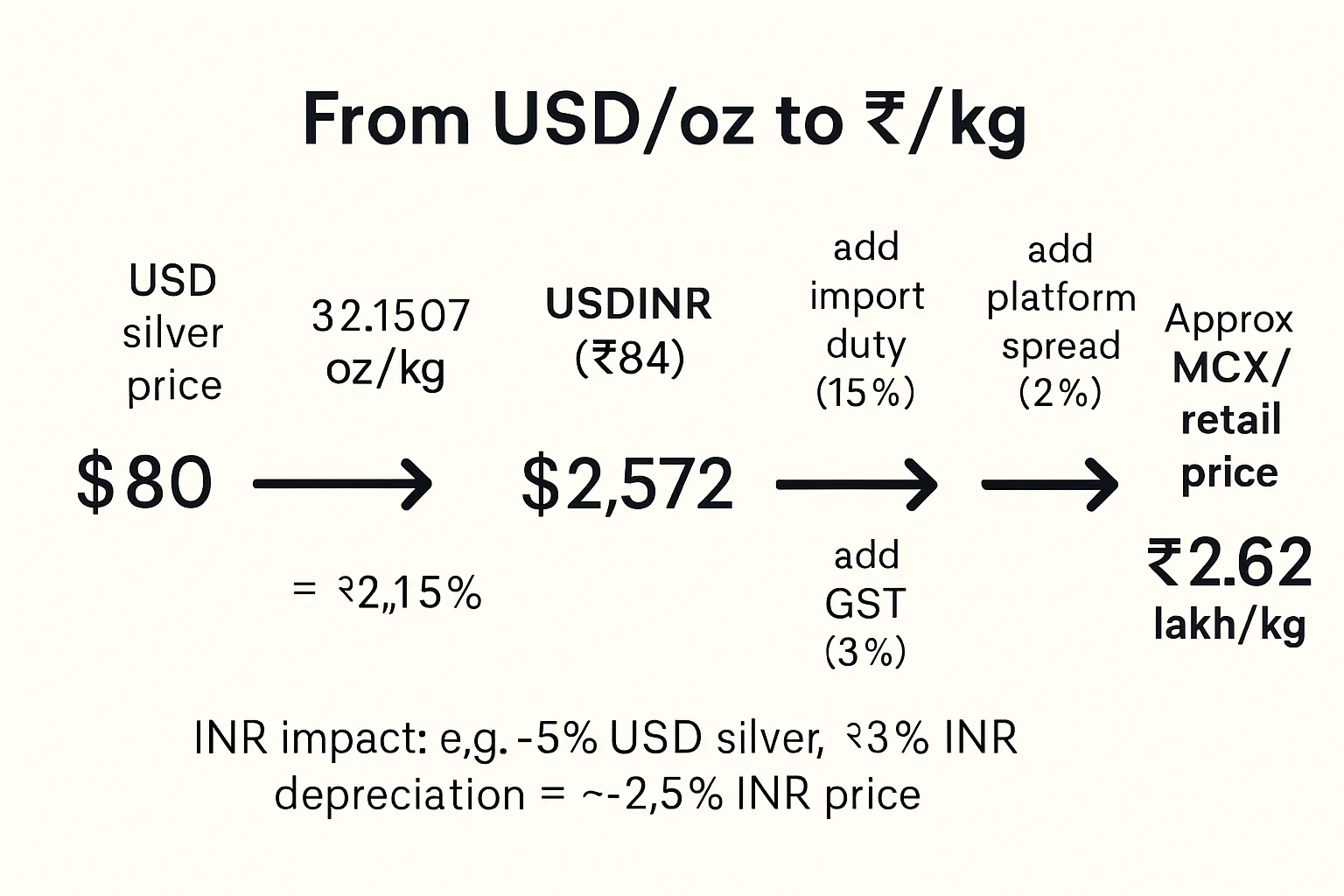
The Conversion Pipeline
- USD/oz price → troy ounces per kg → USD/kg → x USD/INR → import duty + GST → MCX/retail
Why INR Direction Matters
INR weakness can lift local prices even when USD silver is flat.
INR strength can cushion global drawdowns.
Practical Takeaways
- Track USDINR along with silver.
- For short-term trades, watch basis/premiums; for investing, focus on trend + DCA.
Mini-Example
- A 5% dip in USD silver combined with a 3% INR depreciation:
- USD move: −5%
- FX move: +3% to INR price
- Approx INR impact: −2% overall, meaning MCX may not fall as much as global silver.
Cost Layering
- Import duty, GST (3%), and platform spreads (typically 1–3%) create a gap between the global reference and your buy/sell outcomes.
- Expect your executed INR/kg price to sit above the clean USD×FX conversion due to these layers.
Best Ways to Invest in Silver in India (2026): ETFs vs Digital Silver vs Physical vs Futures
Option 1: Silver ETFs/FOFs (SEBI-regulated)
- Pros: transparent NAV, low expense ratios, easy SIPs, no demat needed via FOFs, regulated custody
- Cons: tracking error vs spot, market hours/trading spreads, brokerage + TER apply
Option 2: Digital Silver (Micro-Investing)
Pros: start at ₹1, instant UPI, fractional ownership, insured vaulting, doorstep delivery option
Cons: buy–sell spread, 3% GST on buys, provider terms vary
OroPocket edge: ₹1 entry, UPI in 30 seconds, free Bitcoin rewards (Satoshi) on every purchase, daily streak bonuses, spin-to-win, gifting gold/silver
Option 3: Physical Silver (Coins/Bars)
- Pros: tangible asset, gifting/tradition appeal, delivery on the spot
- Cons: making/minting charges, purity checks and possible discounts on resale, storage/insurance hassles
Option 4: Futures on MCX (Advanced)
- Pros: leverage for tactical trades, hedging flexibility, multiple contract sizes (1 kg, 5 kg, 30 kg)
- Cons: high risk, roll/impact costs, margin calls and active monitoring – not for beginners
Which Is Best for You?
- Investors: ETFs or disciplined digital micro-investing (DCA/SIPs)
- Savers/gifters: digital silver with delivery option; traditional buyers may prefer coins/bars for ceremonies
Silver Investment Options: Quick Comparison (2026)
| Option | Min ticket size | Costs/fees (TER/spread/GST) | Liquidity | Tax treatment | Custody | Convenience | Rewards | Best for |
|---|---|---|---|---|---|---|---|---|
| Silver ETF (NSE/BSE) | 1 unit (~1g equivalent) | TER ~0.3–0.6% p.a.; brokerage + exchange charges; small tracking error | High during market hours | >24 months: LTCG ~12.5% (no indexation); ≤24 months: slab (per current rules) | Fund custodian; units in demat | Easy via broker apps; SIP via broker | None | Long-term investors wanting low-cost, regulated exposure |
| Silver FOF (Mutual Fund) | SIP from ₹100–₹500 (AMC dependent) | TER of FOF + underlying ETF; no demat required | Good (AMC cut-off NAV) | Same as above for >24 months/≤24 months (per current rules) | AMC custodian | Very easy; auto-SIP | None | Investors without demat who want SIP simplicity |
| Digital Silver (OroPocket) | From ₹1 | 3% GST on buy; platform buy–sell spread ~1–3% | High (in-app buy/sell 24×7) | Treated like physical: gains taxed per holding period; no indexation; check FY rules | 100% insured vaults | Instant UPI, fractional, delivery optional | Bitcoin cashback (Satoshi), daily streaks, spin-to-win, referrals | Micro-investors, habit builders, gifters |
| Physical Silver (Coins/Bars) | Typically 10g+ (smaller available but costlier) | 3% GST; making/minting charges 5–25%; buyback discounts | Moderate; resale at jewelers with spread | Capital gains; no indexation; making charges unrecoverable | Self-custody; storage/insurance needed | Offline or select online; verification needed | None | Gifting, rituals, collectors |
| MCX Futures (Advanced) | Margin for 1 kg/5 kg/30 kg contracts (≈12–20% of contract value) | Brokerage, exchange/CTT, spreads; slippage/roll costs | High on active contracts | Business income at slab; compliance and audit norms may apply | No physical until delivery; derivative position | Pro trading setup; active monitoring | None | Experienced traders/hedgers, short-term tactical exposure |
Timing Without Guessing: DCA, Micro-Investing, And Ratio-Based Adds
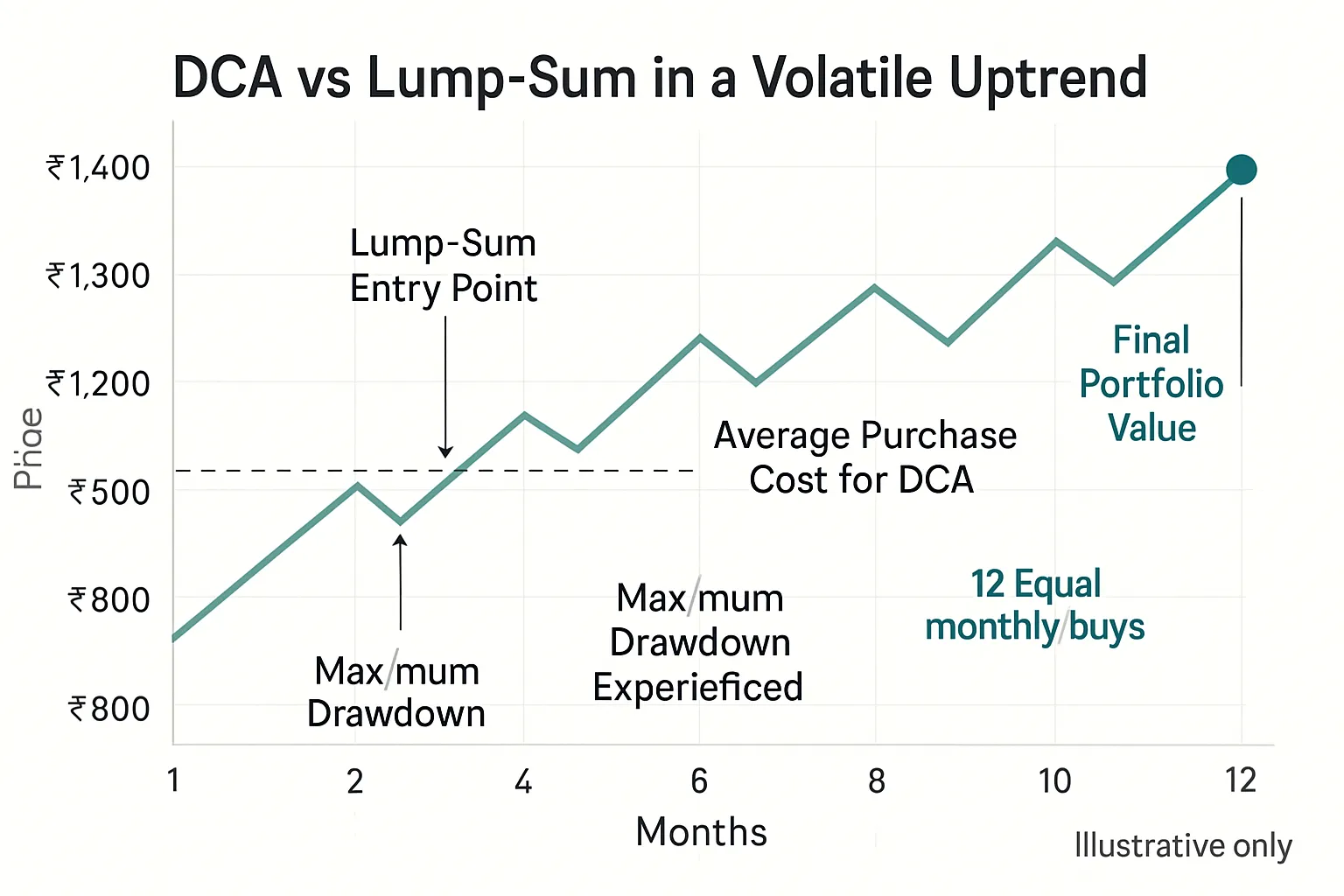
Why DCA Works in Volatile Assets
Reduces regret, smooths your entry price, and keeps you invested through dips instead of timing tops.
A Simple Plan for 2026
- Split your planned silver allocation into 6–12 tranches over 3–12 months.
- Add 1–2 extra tranches on 7–12% pullbacks from recent highs.
- Tilt adds using GSR bands: allocate more to silver when GSR > 75–80; neutral between 60–75; cautious when < 60.
How to Execute with OroPocket
- Start from ₹1 via UPI and automate daily/weekly buy streaks.
- Earn free Satoshi on every purchase – two assets (silver + Bitcoin rewards) for the price of one.
- Use Spin to Win for bonus gold/Bitcoin rewards; referral gives 100 Satoshi + a free spin.
- Set calendar reminders and gift silver for milestones to keep the habit sticky.
Bonus: Rebalancing Rule of Thumb
- Cap silver at 5–10% of your portfolio and rebalance annually back to target.
- Shift between gold and silver when the GSR hits extreme bands to maintain risk balance.
Visual
Risk Radar 2026: What Could Go Wrong (And How to Protect Yourself)
Key Risks
Sharp corrections after parabolic moves; −20% to −35% drawdowns are common in silver.
Stronger USD/INR or rising US real rates pressuring metals; Fed surprise hawkishness can bite.
Tech thrift/substitution if prices stay elevated (PV, electronics reduce silver loadings).
Domestic liquidity/premium swings on MCX; wider buy–sell spreads during stress.
Policy/tax changes that alter short-term behavior or post-tax returns.
Mitigations
- Staggered buying: DCA in 6–12 tranches; add only on meaningful dips (7–12%).
- Set caps: keep silver to 5–10% of your portfolio; rebalance annually back to target.
- Maintain safety net: keep 6–9 months’ expenses outside markets; avoid leverage for investing.
- Prefer safer rails: use SEBI-regulated ETFs/FOFs or trusted, RBI-compliant digital providers with 100% insured vaults.
- Process over headlines: focus on the multi-year industrial thesis; use the Gold–Silver Ratio and trend signals, not social media hype.
- Liquidity discipline: before larger buys, check MCX liquidity and domestic premiums; avoid chasing thin markets.
- FX awareness: monitor USDINR – rupee swings can amplify gains/losses in INR terms.
How Much Silver Should You Own? Allocation Rules for Indian Investors
Typical Bands for 2026
- First-time investors: 2–5% silver within your overall gold+silver bucket
- Balanced investors: 5–8% silver; total gold+silver 15–20% of portfolio
- Aggressive diversifiers: 8–10% silver; rebalance annually
Portfolio Context
Start with the 60/20/20 lens (equity/debt/gold+silver), then split gold vs silver based on risk tolerance and horizon.
Consider job/income stability, volatility comfort, and the fact that silver swings harder than gold.
Silver Allocation: Sample Portfolios (2026)
| Profile | Equity | Debt | Gold | Silver | Target bands (silver) | Rebalancing rule | Volatility notes |
|---|---|---|---|---|---|---|---|
| First-time | 60% | 20% | 15–18% | 2–5% | 2–5% | Annual calendar rebalance; trim adds after +25% spikes | Keep silver small; use DCA/micro-buys |
| Balanced | 60% | 20% | 12–15% | 5–8% | 5–8% | Rebalance annually or if GSR < 60 or > 80 | Expect -20% to -35% drawdowns in cycles |
| Aggressive | 55–60% | 15–20% | 10–12% | 8–10% | 8–10% (cap) | Rebalance annually; shift vs gold at GSR extremes | Higher return potential, higher whipsaws |
Notes:
- Total gold+silver typically 15–20% of portfolio for most investors.
- Use the Gold–Silver Ratio (GSR): add more silver when GSR > 75–80; shift toward gold when GSR < 60.
Rebalancing Triggers
- Large price spikes (for example, +25% within months) or GSR touching extreme bands.
- Annual calendar rebalancing for discipline (helps lock gains and control risk).
Scenario Plans
- If prices spike: harvest partial gains from silver; move proceeds to gold or your cash buffer.
- If prices dip: add via micro-buys/SIPs within your silver cap; avoid going over target bands.
Taxes, Costs, And Compliance in 2026: Don’t Let Friction Eat Returns
Taxes at a Glance (Indicative)
- Silver ETFs/FOFs: Long-term (>24 months) taxed at 12.5% without indexation (post July 2024 regime); STCG taxed at slab rates. Check latest AMC disclosures and your assessment year.
- Digital/physical silver: 3% GST on buys; gains taxed as capital gains or slab (structure-dependent). Review provider policy and your CA’s guidance.
- Futures: Trading gains typically treated as business income; includes audit/compliance thresholds. Consult a tax professional.
“Finance (No. 2) Act, 2024 set long-term capital gains at 12.5% without indexation for assets transferred on/after July 23, 2024 (Section 112).” – Source
Hidden Costs to Track
ETFs/FOFs: Expense ratio (TER), brokerage/exchange charges, tracking error vs spot.
Digital silver: Buy–sell spread, GST on purchases, storage/withdrawal/delivery fees (if any).
Physical: Making/minting charges, assay/purity checks, resale discounts, storage/insurance.
Futures: Brokerage, CTT, margins, slippage/roll costs, and potential impact from thin liquidity.
Compliance & Safety
- Prefer SEBI-regulated ETFs/FOFs for market exposure and transparent custody.
- For digital silver, choose RBI-compliant partners, 100% insured vaults, and regular independent audits.
- OroPocket is RBI-compliant with fully insured vaulting and authorized bullion partners; instant UPI, mobile-first convenience.
Actionable Tip
- Maintain a simple cost ledger for every buy/sell:
- Buy date and price, fees/TER, GST, spreads/premiums
- Exit price, exit costs, holding period
- This makes tax filing easier and shows your true net returns.
Conclusion: Silver Can Shine – Start Small, Stay Steady
The Bottom Line
Silver remains a high-volatility, high-conviction satellite asset for Indian investors in 2026.
The 2025 surge doesn’t kill the thesis, but it demands smarter entries and risk caps.
Your Next 15-Minute Plan
- Pick your target allocation (e.g., 5–8%).
- Set up staggered buys (weekly/biweekly) and add on 7–12% pullbacks.
- Track the Gold–Silver Ratio (GSR) and INR; rebalance annually to your target.
Why Start on OroPocket Today
₹1 entry with instant UPI, so you can phase buys without overthinking.
Earn free Bitcoin (Satoshi) on every silver purchase; daily streak rewards and spins build habit.
RBI-compliant, insured vaults, and the ability to gift metal easily.